
Some books arrive in your life exactly when you need them, and Dibs in Search of Self found me in the middle of a caregiving year, which is to say, it found me at my most porous.
First published in 1964, this slim classic by clinical psychologist Virginia Axline is not really a case study, though it began as one. It is the account of a little boy of about five who will not speak, will not play, will not let anyone near him: a child who curls into himself and lashes out physically when the world presses too close. To his teachers he is a puzzle; to his parents, a disappointment they cannot quite name. And yet, week by week, in the quiet of Axline’s playroom, Dibs begins to unlatch.
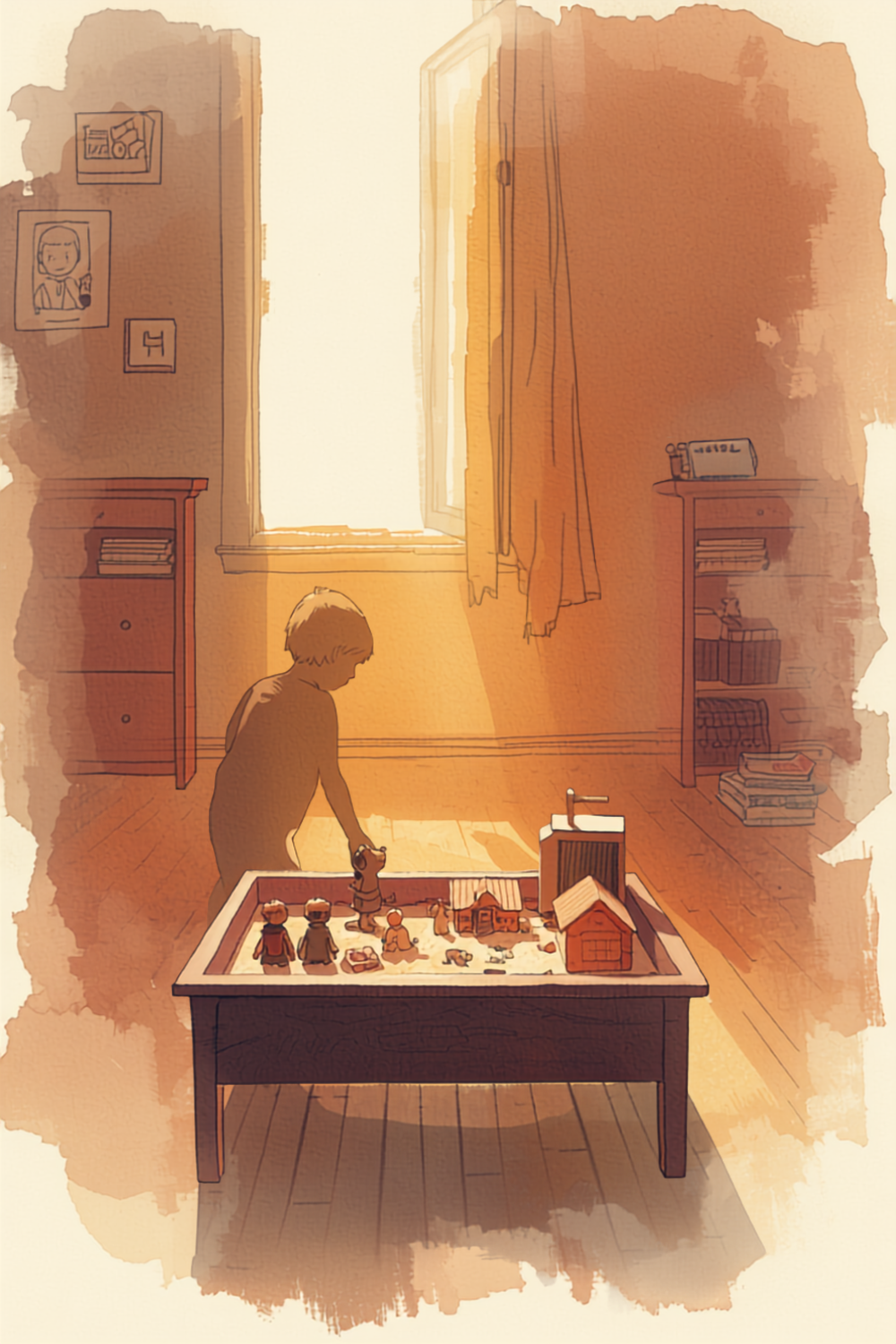
What moved me most is how she does it. Axline, “Miss A,” as Dibs calls her, barely moves. She does not lead, does not coax, does not correct. She lets Dibs set the course of every session, waiting until he asks something of her before she offers it. The playroom is his and his alone: a safe, unhurried space where he can arrange the world exactly as he needs it and in doing so slowly meet himself. There is no diagnosis here, no label, no clinical verdict. Just one year of a child being given room to become.
The book widens, too, into the house Dibs comes home to; the pressure, the disappointment, the love that has curdled into expectation. Axline is never cruel about his parents, and that restraint is part of the book’s quiet power. She shows how a gifted child had hidden his whole self inside a shell simply to survive the weight of what was wanted from him, and how the right environment, patient, warm, unforcing, could coax that self back out into the light.
I read this as a mother of a special-needs child, and so I did not read it from a safe distance. I know the particular ache of watching your child express themselves on their own terms, in their own time, in a language that isn’t always words. I recognised the frustration and sadness of Dibs’ parents more than I would like to admit and it was genuinely heartening to reach the part where, with the right guidance, they came to understand and accept their son rather than mould him into someone easier.
That, in the end, is what Dibs is about. Not therapy, not disorder, not fixing. It is about the enormous, quiet difference that a positive attitude and a safe place to simply be can make in a child’s life. Pressure from family, from school, from a watching society can do real harm. But care, given rightly, can hand a child back to himself.
A short book. A long echo. I closed it and sat with it for a while.
My rating 5/5
Leave a Reply