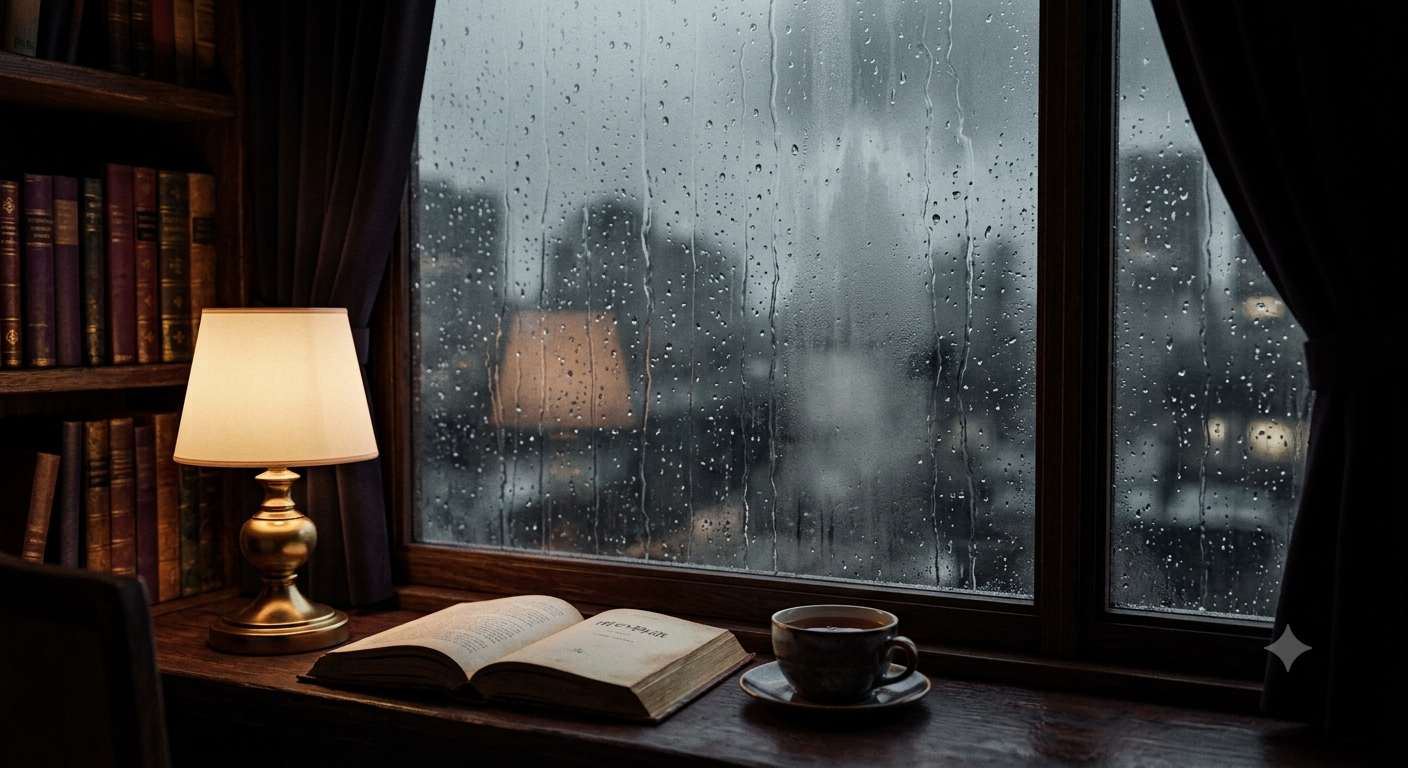


Every July, without fail, I make the same announcement over morning tea: this year, surely, it has rained more than last. And every July, without fail, my husband looks up from his phone with the weary patience of a man who has heard this precise sentence delivered with this precise conviction for as many monsoons as we have been married, and says gently, infuriatingly that I say this every single year.
He may have a point. He usually does, which is its own small tragedy.
But here is the thing about a woman who spent thirteen years reading balance sheets for a living: I do not care for an unaudited claim. Give me a hunch and I will want the ledger behind it. So this year I very nearly did it; very nearly pulled the actual rainfall figures, lined July against July, and settled the matter with the cold finality of a spreadsheet. I imagined the vindication. I imagined sliding the numbers across the breakfast table like a prosecutor resting her case.
I did not do it. Partly because the monsoon has a way of making you feel that spreadsheets are rather beside the point and partly, if I’m honest, because I was slightly afraid the numbers might side with him.
Whatever the ledger says, this much is not in dispute: the rain has been relentless. Not the polite, apologetic drizzle that lets you nip to the shops and back. This has been proper Mumbai monsoon, the kind that arrives like a houseguest invited for the weekend who is still, weeks later, occupying the sofa and finishing your biscuits. The sky has worn the same flat, pewter grey for what feels like an age. The balcony has developed opinions. Somewhere in the building, water is finding a way in that it has never found before, because water always finds the one route everyone swore was sealed.
The laundry no longer dries so much as it hangs about the house in a state of permanent, faintly reproachful dampness. We own, by my last count, five umbrellas, and can locate on any given rainy morning exactly none of them. The hallway smells of wet earth and wetter socks. My footwear has entered its annual witness-protection programme, vanishing entirely in favour of a single pair of long-suffering rubber slippers.
And the puddles. Oh, the puddles. Great brown mirrors on every path, each one – to a small person – a personal invitation. Little Miss has spent the better part of a fortnight pressed to the window like a barnacle, one palm flat against the glass, watching the water gather and glitter and go absolutely to waste without her in it. There is a particular slump to her shoulders when I say not today. A whole essay lives in that slump. She has been more inside than out, and a child kept in during monsoon is a small weather system of her own – building pressure, gathering cloud, threatening to break over the living room at any moment.
We have read the same books. We have played with the same blocks. Even taken help from the television. I have watched her sit with her chin in her hands, with a look that clearly says “ I’m bored and you are doing nothing about it”. If allowed, she will spend hours in the rain, soaking and letting water drops fall on her tongue.
And then, at the very end of July, as if the month wanted the last word we fell ill. All three of us, one after another, like a row of dominoes nobody meant to touch. First the low ache, then the heat, then the particular indignity of a household in which everyone is too unwell to look after anyone else.
For Little Miss, it did not stay low. The fever climbed in a way that stopped being ordinary, and stopped being something we could manage with a thermometer and a brave face and so we did the thing you never quite rehearse for. We packed a small bag at an unreasonable hour and admitted her.
I will not dress it up. Two days in a hospital with your child is two days lived in a different, thinner air. The world shrinks to the size of a bed and a drip and a number on a monitor you begin to read like scripture. I, who audit everything, found there was nothing here to audit; no ledger to check, no risk to price: only the long flat hours and the animal work of staying calm so that she would stay calm.
She looked so small in that bed. She gripped my finger with a fierceness that quietly undid me, and sometimes watched the colourful paintings on the ward walls and sometimes stared at me. All I did was kept hold of her hand which wasn’t attached to the drip and kept singing made up songs to entertain her.
We are home now. We are, all three of us, better: the blessed, boring, wildly underrated state of better. I have never in my life been so grateful for the ordinary sound of a child thundering down a corridor she has no business running in.
The rain, of course, has not stopped. It is going even as I write this, drumming on the sill with the steady indifference of something that will outlast all our small dramas. And I find I have lost my appetite for the argument. Let it have rained more, or less, or exactly the same. Let the figures say what they like. I know now that a year is not measured in millimetres. Some Julys are wetter than others not because of the sky but because of what happened underneath it. The fevers weathered, the small hand held, the ordinary miracle of everyone waking up, at last, cool to the touch.
So my husband may be right. I may say it every year. But I suspect I say it because every year I am really saying something else – that we were here, that we got thoroughly soaked, that we came through. That the counting was never really about the rain at all.
Leave a Reply